4 APR 1904-4 SEP 1982 DR.BABURAO PANDURANG PATEL (PATIL) MASWAN PALGHAR
‘Most wretched, boring and amateurish hotch-potch’: Meet Baburao Patel, pioneering film journalist
An excerpt from Sidharth Bhatia’s 'The Patels of Filmindia: Pioneers of Indian Journalism', an account of the movie magazine run by Baburao and Sushila Rani Patel for 50 years.
These were mainly profiles of actors and others from Bombay’s film industry, people whom he had known personally when he was a scriptwriter in the city. After India’s partition, he left for Pakistan but soon ran into trouble with the authorities because he was marked as a “most dangerous progressive”. Broke and desperate, he turned to writing for popular journals, drawing upon his own memories and experiences...
A collection of his pieces, translated into English as “stars from another sky”, has profiles of big stars like Ashok Kumar, Noorjehan and Naseem Banu, long forgotten actors like Rafiq Ghaznavi and Kuldeep Kaur and one journalist – Baburao Patel.
The name will mean nothing to a modern reader but at one time, for a long stretch of nearly twenty years, Baburao Patel was the most feared journalist in the Indian film industry. Editor of Filmindia, a monthly magazine, Baburao’s comments, by way of columns, film reviews and his hugely read Q and A section were followed assiduously by his fans. He received letters in the thousands from readers all over the world. Rarely has an editor had such a connect with his public as Baburao had.
“Baburao wrote with eloquence and power. He had a sharp and inimitable sense of humour, often barbed. There was a tough guy assertiveness about his writing. He could also be venomous in a way that no other writer of English in India has ever been able to match,” wrote Manto…
Just who was Baburao Patel? What made him and his magazine so well-loved and detested at the same time? Why, if it was such a popular magazine, with subscribers in India and even far-flung places like Fiji and Africa, did it wither away and then eventually fold up?
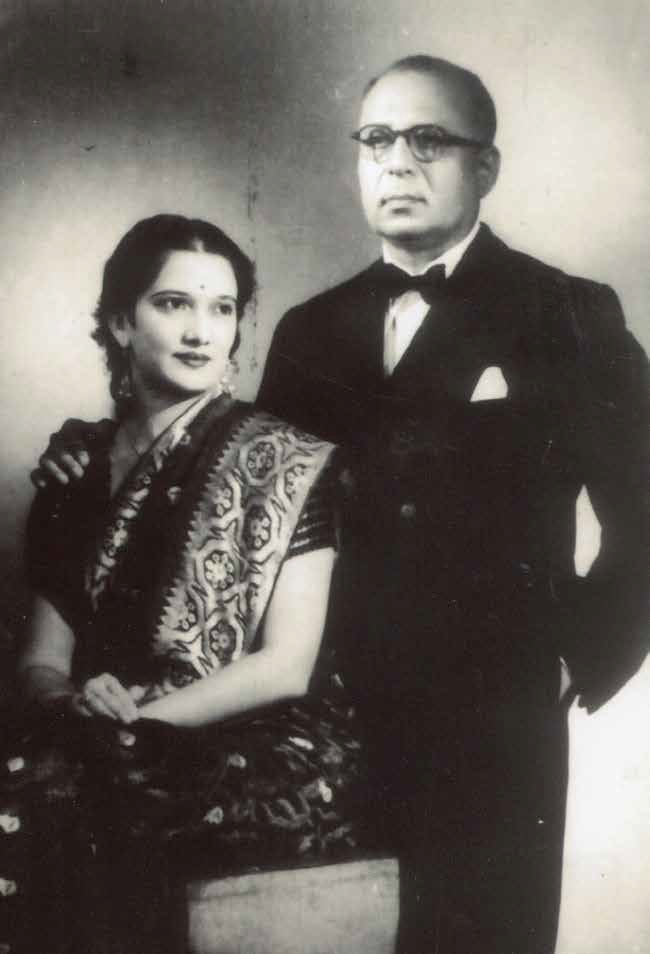
Sushilarani and Baburao Patel. Photo courtesy Estate of Sushila Rani Patel.
Baburao Patel was born on 4 April 1904, a happy confluence of numbers, in Maswan, a sleepy village about 100 kilometres from Mumbai, then called Bombay…Baburao’s father, Pandurang Vithal Patil, was one of the few lawyers from the Vanzara community and, indeed, in the village. The family name, Patil, got changed to Patel over the years, leading many to believe that he was a Gujarati. His mother, Jamuna, died when Baburao was just four, leaving him to be brought up by his uncle and father, who then remarried. The family shifted to Bombay and he was admitted to St. Xavier’s school. The young Baburao did not do well and left school without completing his matriculation. The lack of formal education always bothered him, and he had great respect for intellectuals and scholars, but it did not stop him from his pursuit of knowledge. Throughout his life he remained an avid reader of subjects ranging from Hindu philosophy and international politics to even alternative medicine.
After trying his hand at odd jobs, including selling cheap miracle cures, in 1926 Baburao joined a newly started film magazine, Cinema Samachar. Cinema was at its early stages and the need for a publication concentrating on this new, exciting medium was felt. No copies of this magazine remain, but it is believed that it came out in three languages – Hindi, English and Urdu. He then found himself drifting into the fledgling film industry as a scriptwriter and director. He made five films in the period between 1929-'35, beginning with Kismet (1929), Sati Mahananda (1933), then Maharani and Bala Joban (1935), and Chand ka Tukda (1933-'35)…
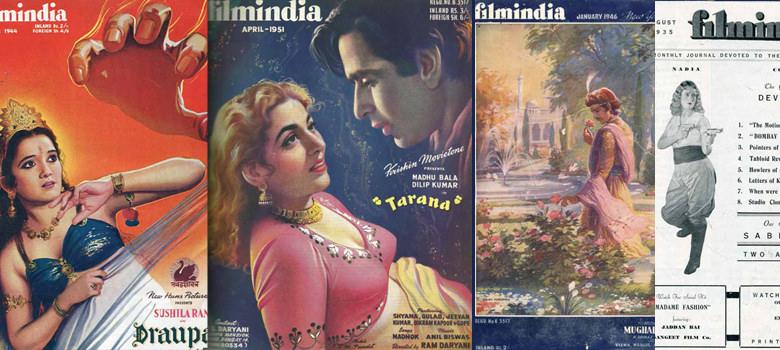
In 1935, Baburao joined hands with DN Parker, who owned New Jack Printing Press... The magazine, calledFilmindia, was launched as a monthly in April 1935, at a price of 4 annas (annual inland subscription was Rs 3 and foreign subscription priced at Rs 5). It was printed on high-quality art paper and the cover was hand-painted, showing Nalini Tarkhud – an actress and novelist whose film Chandrasena, directed by Shantaram, is advertised inside… Inside, a lot of space was devoted to art plates of the stars of the time and scores of stills from the latest films.
The contents page not only listed what was inside, but gave an idea of what the editor’s viewpoint was: “American Producers and Anti-Indian Propaganda”, “Culture through the Eyes” were mentioned among the articles. The editorial said… “We don’t make any pretensions of having supplied a long felt want, but we certainly entertain an ambition of supporting this industry by honest journalism and constructive criticism of men and things and aspire to create a taste in our readers for Indian pictures (that) are representative of Indian culture and traditions.”
It was clear that upholding and promoting Indian culture was a very important part of Baburao Patel’s world view and Filmindia was to stake claim to be its custodian for years to come. As for honest journalism and constructive criticism, his detractors maintained that he had come nowhere near it but his fans felt otherwise through most of his career.
‘She has no face, figure or voice’
Baburao’s combative and take-no-prisoners style of writing becomes apparent right away. He wrote most of the magazine himself and certainly did the reviews, which he said would never be influenced or prejudiced by advertisers or by others. Advertisers who did not like this policy were welcome to stop their ads, he declared.
His review for the film Desh Dasi, produced by Ranjit Movietone, said it was a story “like an old pair of trousers made serviceable by bright and coloured patches”. Continuing in his colourful language, he said, “Direction of Chandulal Shah has certainly degenerated. An artiste at one time, in his hunt for money he has left his ideals far behind and in Desh Dasi we find him as the superintendent of the Mint rather than as a director.” He used the word “flopped” and ran afoul of the powerful Chandulal. Shah’s brother, Dayarambhai, told Parker frankly not to expect ads, but Parker stood by him.
The next review was of Fashionable India, where he was somewhat subdued in his criticism, but did point out that one of the girls, Johra Jan, had “no face, figure or voice”. From what was to come in later years, this was extremely gentle and understated.
The magazine was selling and subscribers were queuing up, but Baburao was broke – he became the first person in his family in “500 years” to go bankrupt. Getting out a magazine with no staff was not easy and Parker was lax with paying salaries. Baburao wrote of how his wife Shireen managed to feed the entire family, consisting of the couple and four kids, on “one rupee”. The editor had to take up assignments to write ad copy for films on the side, which brought in some income…
The issue has announcements of films that were in the cinemas as well as being produced at the time. Some of them include Painted Sin, Bahar-e-Suleimani, Orphans of Society and Mumbaya ki Sethani....
The ads are equally appealing to anyone interested in that period. Forthcoming films that are advertised include Toll of Love (S. Baburao, Shamrao, Zohra), Josh-e-Watan, After the Earthquake and the “first ever” detective thriller,Night Bird.
But it was his column “Bombay Calling” (written under the pen name “Judas”) that seemed the most promising. Full of gossipy snippets, it wrote about the general shenanigans of industry denizens in an entertaining way. “All these Bengalees have committed a great mistake in coming down to Bombay and create [sic] a new graft of culture in our industry. I do not think they have been received well and in fact some of them have been grossly insulted.”
He wrote about film production companies that were mere letterheads, fights between stars and directors, and shady producers who bought a car and acquired a pretty girl to impress financiers. It was no coincidence that film studios were far away from the city, because it offered a chance to the financier to offer a lift home to the heroine, he said mischievously.
The column ended with a note: “Dear Reader, if you have enjoyed these Tit-Bits write to us so and we shall put some more spice and pepper and serve you another plate next time.”
Bullets over Bollywood
There was not much competition in the market, except for some Urdu magazines in Lahore. But mainstream newspapers did have film reviewers, who eschewed gossip but were taken seriously by the industry.
One of them was Khwaja Ahmed Abbas. Abbas, who was to become famous later on for his scripts for Raj Kapoor, including Awaara, Shri 420 and Bobby, was then working for Bombay Chronicle and was a film critic. He had recently visited Hollywood and was a fan of European cinema, and thought of himself as a kind of superior film buff. Hindi films were below his tastes and he let it be known through his columns.
Shantaram’s film Aadmi (1939), however, impressed him and he dashed off a long review, praising it for being a “textbook on cinematic realism” and comparing it to the works of masters like Eisenstein, Pudovkin and Erich Von Stroheim. The director asked to see this young man, writes Abbas in his autobiography, I am not an Island. “That meeting, and the seeing of the picture together (I had already seen it four or five times), led to a friendship between Shantaram and me, with Baburao Patel’s ebullient personality and super-ego providing a link between the self-taught middle-aged Maharashtrian director and the young man fresh from a brief visit to Hollywood who vainly thought that he had got the whole world film industry by the tail.”
Baburao asked Abbas to write for Filmindia. “I had a sneaking admiration for Baburao and his magazine—they were everything that I wasn’t. They were glossy, opulent, popular, they hit hard when necessary and (not infrequently) when not necessary, and thus came to be a model of the ‘sledge hammer’ style of film journalism.” Baburao offered him fifty rupees per piece and complete editorial freedom.
Together, writes Abbas, they carried on a campaign against “anti-Indian” films in general and Gunga Din in particular. Other writers joined in, including Bakulesh, Jamil Ansari, Jitubhai and Saadat Hasan Manto, “the quickest literary writer who wrote remarkable short stories and humorous articles, as well as film reviews, straight on his Urdu typewriter”. Jointly they also formed the Film Journalists Association with “Baburao as the (inevitable) president”.
When Baburao Patel went to Hollywood for his own tour in 1939, he left the magazine in Abbas’s hands, with strict instructions not to tamper with the “Question and Answer” and the “You Hardly Believe” columns. “Though we differed on the fundamental ethics of journalism, and sometimes even quarrelled, a strange love-hate relationship developed between us. Baburao trusted and respected my integrity, and I had a sneaking admiration for Baburao’s guts in writing the sort of things he did, which were always spiced with gossip and scandal, and [were] occasionally libellous.”
Abbas’s own writings in the magazine were full of earnestness and righteous anger, as he launched into one target after another. He pilloried Hindi producers for copying foreign films, attacked anti-India films and let loose against “bogus critics”: “Pity the poor film critic – There is too much competition from the Viceroy, Governors, National Leaders, Society Ladies and studio publicity managers.”
Yet there was a difference in styles between Patel and Abbas and, for that matter, critics from other publications; Patel stood apart from all of them. A journalist, Jamil Ansari, analyzed them in the magazine: “Baburao Patel—if his pistol misses the target, he knocks you down with the butt end of it;” “K.A. Abbas – Never commits himself, even to himself”; “Miss Clare Mendonca (Times of India): Studio's publicity-officer's dream come true.” It was a fairly apt description of each one of them. And over the next few decades, Baburao continued to use the butt end of his pistol to devastating effect.


DR BABURAO PATEL DR SUSHILA RANI PATEL ALL CONCEPTS AND WORK DURING ALL TIMES OF LIFE
Wednesday, July 22, 2015
23rd JULY 2015 DR. BABURAO PANDURANG PATEL ( PATIL ) BIOGRAPHY AND REVIEWS
Book Review: Sidharth Bhatia’s ‘The Patels of Filmindia: Pioneers of Indian Film Journalism’
22
I have a confession to make: despite my love for cinema, I’ve never been too keen on film magazines. When I was a child, my parents never bought film magazines, and by the time I’d grown into my teens and had the freedom (and pocket money) to buy whatever reading material I chose, all my major interest in films had shifted to films made before I’d even been born.
As a result, I never knew of Filmindia (or, as it was later renamed, Mother India) until a few years ago, when I read, on Greta’s blog, about Baburao Patel and his film magazine, Filmindia. Reading excerpts on Memsaabstory from Filmindia (and, more often than not, snorting out loud at Baburao Patel’s irreverence), or gushing over the fabulous artwork, I couldn’t help but think:if there’s ever one film magazine I would want to read, it would be the erstwhile Filmindia.
When I heard that Sidharth Bhatia was going to be releasing his book on Baburao Patel andFilmindia, I knew this was right up my alley. Not so much for Baburao Patel (who, I had convinced myself, after having read some of his writing, I did not like—not a nice man), but for the art, the ads, the feel of the 30s, the 40s, the 50s. Even the 60s. The golden age of Hindi cinema. That—the cinema—was what I wanted to read about, what I wanted to see.

Bhatia’s book, The Patels of Filmindia: Pioneers of Indian Film Journalism (2015; Indus Source Books, ISBN: 978-81-88569-67-0; 171 pages; Rs 2,000), however, came as a revelation—because it had me deeply engrossed not just in its many excerpts from Filmindia, but in the lives of Baburao Patel and his wife Sushila Rani Patel too.
The first ten chapters of the book trace the lives, both personal and professional, of Baburao Patel and Sushila. Born in 1904, Baburao came to Bombay as a boy when his family shifted to the city, and after a while left off studying formally (though he remained a voracious reader all his life). A brief stint in cinema—as script writer and director—followed, until 1935, when, along with the owner of the New Jack Printing Press, he launched Filmindia. There was no looking back, then: Baburao Patel went from strength to strength, fearless, brusque, and outspoken in his editorials (and most of the articles and film reviews, which he wrote himself).
There are a couple of chapters about Baburao’s pursuit of Sushila (whom he launched in a film and later married—even though he was already married and was nearly 14 years older than her). There are interesting anecdotes about the Patels’ relationships with the who’s who of Indian society—and not just the film world—of that period, of the love-hate relationships, too, with everybody from Noorjehan to KA Abbas to the Anands of Navketan. Baburao Patel and Sushila (who took over her fair share of Filmindia work) were not merely the people who edited and ran India’s best-loved film magazine; they were, obviously, stalwarts in their own right. Worthy enough for Baburao Patel to stand for elections, to win, to convert his magazine from a cinema-oriented one to a mix in which politics dominated.
Following the biographies of Baburao, Sushila, and the magazine they ran for 50 years (Filmindia, later named Mother India shut shop in 1985) comes the magazine itself: 80 pages of reviews, articles, and Question and Answer sections from various issues of Filmindia/Mother India. The reviews range from those of films long forgotten, even lost (like Navketan’s Afsar) to films that are still admired and loved, like Anupama, Devdas, and Kaala Bazaar. The articles run the gamut from ‘howlers’ (Baburao’s word, not mine) from the cinema industry to more general observations on what was wrong (and occasionally, right) with Hindi cinema. Interspersed with the text (which includes images of the original article, as it appeared in the magazine) are lots of images—photographs, advertisements for films (and for other products, ranging from thermos flasks to Lux), and more.
Sometime back, Anu and I were discussing the idea of people dismissing a film because a character (especially a protagonist) is portrayed as less than perfect. Both of us had been of the opinion that a character’s morality (or lack of it) shouldn’t take away from the worth of the film. After all, all stories need not be pretty, and all characters need not be noble and nice.
I was reminded of that while reading this book. Baburao Patel, for all his charisma and fearlessness, comes across as just the sort of person I’d want to steer clear of: rude, sexist, at times bigoted and regressive, hypocritical (to read his fierce indignation about morality as shown onscreen, one would imagine the man to be a saint in his personal life, not the trigamist and serial philanderer he actually was), and—well, generally not likeable. (I will not dwell on his writing, the style of which doesn’t appeal to me—it has an odd, sometimes ungrammatical feel to it that sounds more like Hindi film dialogue translated into English).
Despite that, I’d call this book a keeper. Sidharth Bhatia does a brilliant job of showcasing both the Patels and their creation. The biographies are well told, not too gossipy, not too lengthy. The excerpts chosen for the latter half of the book are well-selected, with an equal mix of well-known films and obscure ones, and films that Baburao lambasted (“C.I.D., in brief, is a tolerably well produced and directed, but cheaply and stupidly conceived, unpalatable crime picture”) to those on which he showered praise (“…Chaudhvin ka Chand is the scintillating result of a rare combination of a good story and skillful presentation…”).
And the images. Nargis and a young Dilip Kumar. Madhubala (a Patel favourite—Sushila Rani Patel taught her English). Durga Khote, Ashok Kumar, Sushila Rani herself in and as Draupadi. Dev Anand. Suraiya, Noorjehan, Raj Kapoor. And dozens of others now long-forgotten. Stills from films, photos from parties and events (Pandit Nehru with Sushila Rani, for instance).
A treat, that’s what this is. And you get to meet two people whose lives could well be the basis of a pretty entertaining film.
You can buy The Patels of Filmindia: Pioneers of Indian Film Journalism here, on Amazon India
Patel rap
It wouldn't be right to call Baburao Patel, editor-publisher of filmindia, a gossip columnist. He was more a reviewer. But his fabled snark dwarfed even Devi's and set the tone for the kind of writing one saw in columns over time. filmindia's three columns, Bombay Calling,You'll Hardly Believe That… and Pictures in Making had Patel sign off as 'Hyacinth' or 'Judas'. "The entire mode of gossip is marked by innuendo, and filmindia was a master of innuendo. Most of it was in answers to letters because people wanted to verify rumours they'd heard about stars and studios. Sometimes, it would appear in the Studio Notessection," informs Neepa Majumdar, author of Wanted Cultured Ladies Only, a book on Indian cinema and actresses of the 1930s-1950s.
Patel's deadpan, offensive humour, which found an audience in no time, has fans even today. One of them is Greta Kaemmer, a vintage Hindi film buff and blogger atMemsaabstory who scans whatever filmindia copies she gets her hands on. "Stardustmagazines from the '70s were gleefully gossipy, but filmindia is my all-time favourite because of Baburao's wit. Today's film columns are poorly written and researched, and mostly unimaginative," she feels.
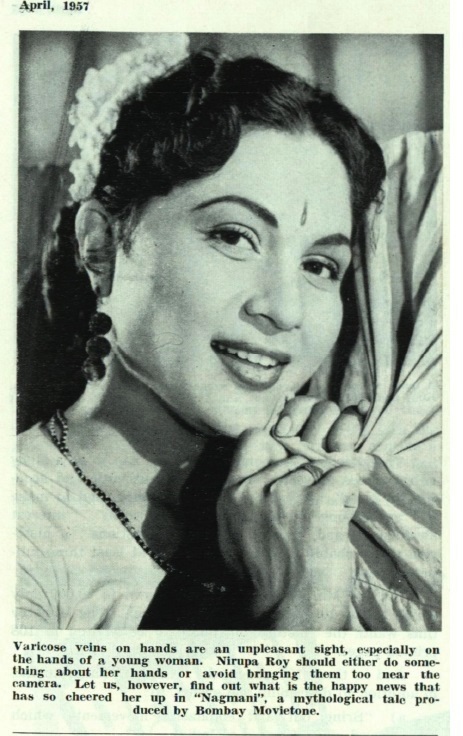
(An April 1957 celeb descriptor from filmindia's Pictures in Making column. Nirupa Roy was one of the many Baburao Patel loved to pick on. Source - Memsaabstory)
It's an opinion shared by film historian SMM Ausaja, who says Patel's vitriol was not only extreme, but also taken sportingly by most: "When V. Shantaram's Jhanak Jhanak Payal Baaje was released, the (review) headline Patel used was 'Mental Masturbation of a Senile Soul'. He said Prithviraj Kapoor was an 'uncouth Pathan who shouldn't be in the industry', that Dilip Kumar looked like 'an escaped prisoner' and Kishore Kumar reminded him of a monkey. But they took it in their stride." Of course, there were exceptions. "Patel once said something that angered (actress) Shanta Apte so much that she went to his office and slapped him," Ausaja says.
Baburao Patel went on to become founder-editor of the political magazine Mother India, establish a homeopathic company called Mother India Pharmaceuticals and member of the Bharatiya Jana Sangh (now BJP). But it's filmindia that he remains synonymous with.
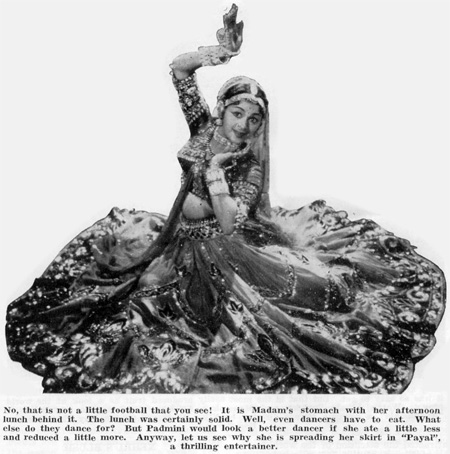
(Baburao Patel being snarky like only he could. The 'victim' here was Padmini. Source- Memsaabstory)
Bachchan's boycott
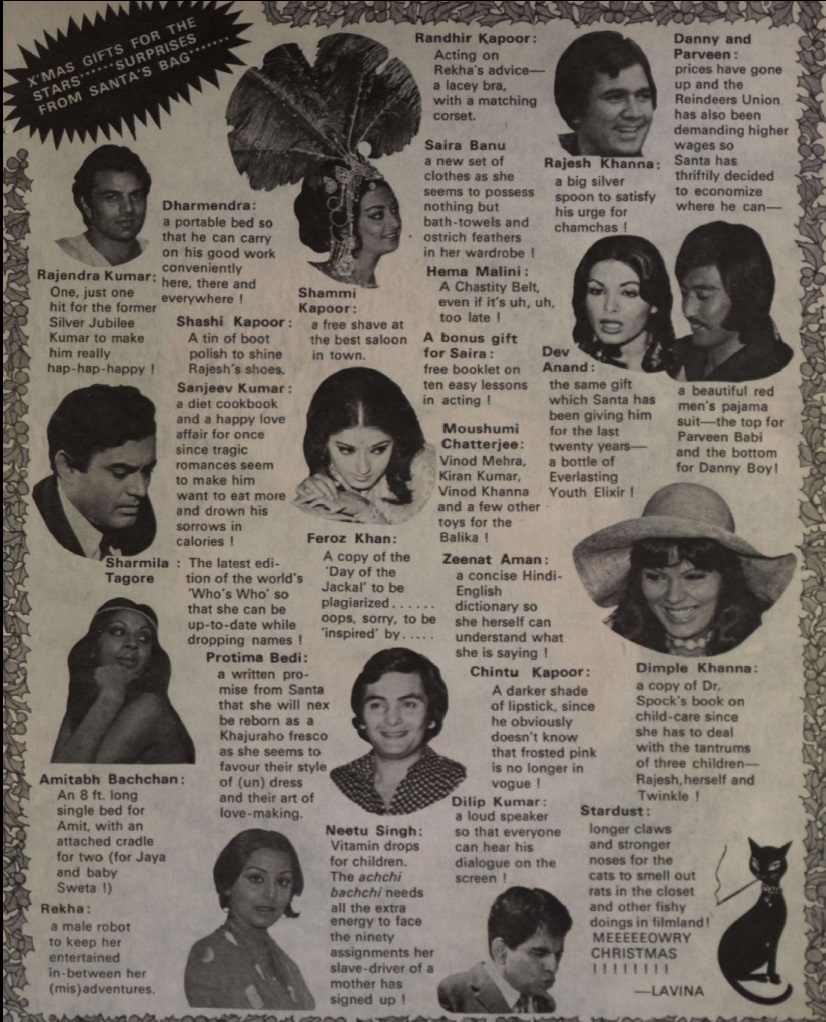
Writing about gossip without mention of Nari Hira's Stardust is like Thanksgiving without cranberry sauce. It was not only the cult Neeta's Natter column, but the magazine as a whole that catapulted gossip to astral levels. The nicknames it gave people – from 'La Tagore' for Sharmila Tagore and 'Mumu' for Mumtaz to 'Garam Dharam' for Dharmendra and 'Chi Chi' for Govinda – became Stardust's calling card. "Stardust projected familiarity with the stars and caught on like no other film magazine ever had," says film journalist Dinesh Raheja. Not least for the way in which it bared the stars of the day.
(Neeta's Natter- 'Gifts for Stars'. Source- Jai Arjun Singh)


 Translate
Popular Posts
 16th JULY 2015 DR. SUSHILA RANI BABURAO PATEL Sushila Rani Patel: Film Industry Pioneer and Renaissance Woman (1918 - 2014) Deba...
- 23rd JULY 2015 DR. BABURAO PANDURANG PATEL ( PATIL ) BIOGRAPHY AND REVIEWS Book Review: Sidharth Bhatia’s ‘The Patels of Filmindia:...
- Dr. Baburao Patel (1904-1982) was an extraordinary personality, touching the lives of all those who came in contact with him. A proli...
 16th JULY 2015 "STARS OF INDIAN SCREEN" 1952 BY DR. BABURAO VITHAL PATEL AND DR. SUSHILA RANI BABURAO PATEL Artist Gallery ...
- 23rd JULY 2015 SHIRIN BABURAO PATEL ( 2nd) B-TOWN BUNGALOW MIRED IN DISPUTE — By Sindhu J Mansukhani | Aug 13, 2014 12:19 am ...
- 23rd JULY 2015 BIOGRAPHY OF DR. BABURAO PATEL AND REVIEWS Book Review: Sidharth Bhatia’s ‘The Patels of Filmindia: Pioneers of Indian F...
- 16th JULY 2015 DR. BABURAO PATEL REVIEW BOBBY SINGH bobbytalkscinema.com Baburao Patel and his famous wicked pen, featuring i...
- 16th JULY 2015 DR. BABURAO PATEL ( PATIL ) FILM REVIEWS Baburao Patel: A Tribute July 13, 2008 by FSJ Today,...
 Evergreen Indian film music Great film music and great music directors Skip to content Home About Memorable Guit...
- Archive for Bollywood Sunday, December 26th, 2010 by admin 2 Charming Jabeen’s two-hour imprisonment Newcomer Jabeen, who ...
About Me

Search Results
The Patels of Filmindia - YouTube

https://www.youtube.com/watch?v=Vzsm3ozhqmY
Jun 15, 2015 - Uploaded by Indus Source Books
... by the Patels—Baburao and Sushila Rani—who owned and edited it. ... Nirvana Shatkam - Shraddhanjali to ...Dr Baburao Doddapaneni, Pain Management - YouTube

https://www.youtube.com/watch?v=Y0cLOn--iR8
May 14, 2014 - Uploaded by bharatmediatv
Dr. Baburao Doddapaneni, Pain Management, is the director of Greenwood Medical Services, a ...Dr. Baburao Gurav Webcast_part 1 - YouTube

https://www.youtube.com/watch?v=TFy9cUdh8N0
Jan 18, 2013 - Uploaded by Bharat4india
'सरकारच्या पैशांवर पोळ्या भाजून घेण्याऱ्यांचं नाही, तर कष्टकऱ्यांच्या भाजी-भाकरीवरचं हे संमेलन आहे', ...C) Message from Dr Baburao Gurav - YouTube

https://www.youtube.com/watch?v=HwTWUh594_g
Feb 11, 2010 - Uploaded by islamvisionpune
पैगंबर मुहम्मद (स.) सर्वांसाठी मोहिमेबद्दल काही विचारवंतांचे मनोगत.Dr. Babu Rao Chaparala, Birmingham, UK - YouTube

https://www.youtube.com/watch?v=HBkPF1Bdepk
May 20, 2014 - Uploaded by bharatmediatv
Dr. Babu Rao Chaparala, Birmingham, UK. bharatmediatv. SubscribeSubscribedDr. Baburao Chaparala, UK - YouTube

https://www.youtube.com/watch?v=rM1N6WB63rc
May 24, 2013 - Uploaded by bharatmediatv
Dr. Baburao Chaparala, UK. bharatmediatv. SubscribeSubscribedUnsubscribe. Loading... Loading ...Dr.Manish Baburao - YouTube

https://www.youtube.com/watch?v=bWyyBOEUzgU
Jun 1, 2015 - Uploaded by Manish Variya
Dr as baburao, satish as raju. ... Pasha Patel speaks at Agro Economics Conference at Akola - Duration: 6 ...Dr. Babu Rao: A short history of SUB-PLAN agitation in ...

https://www.youtube.com/watch?v=JTubA1hTLJ4
Feb 11, 2014 - Uploaded by Dalitcamera Ambedkar
Dr. Babu Rao, teaches in Osmania Medical college and also the Officer on Special Duty exclusively for the ...Hello aaj new year ka kya plan hai.. Baburao style - YouTube

https://www.youtube.com/watch?v=zViwj_3Yfbc
Dec 31, 2015 - Uploaded by Dr. Jaspreet singh k
... movie hera pheri movie .... With baburao style. ... Dr. Jaspreet singh k. SubscribeSubscribed ... Viraj Patel ...Exclusive | Prof Baburao Vulgar Message | Sexual ...

https://www.youtube.com/watch?v=wJTbHNYU1D4
Dec 11, 2015 - Uploaded by Studio N News
Exclusive | Prof Baburao Vulgar Message | Sexual Harassments in Osmania Medical College. Studio N News ...
Stay up to date on results for dr baburao patel.
Create alertSearch Results
Dr. Baburao Patel's Homoeopathic Remedies - Mother India ...
miponline.in/products.html
Results 1 - 20 of 129 - A remedy that takes you to office with a 'head' next morning. Adds to the success of prohibition and saves the liver. It helps you to enjoy your ...Mother India Pharmaceuticals - About Us
miponline.in/about-us.html
Dr.Baburao Patel's book of " Homoeopathic Life Savers" and remedies are well known. In fact, they make him immortal. I have been using these remedies for a ...Dr. Baburao Patel's Homoeopathic Remedies : LIFE-SAVER
www.miponline.in/products/life-saver-detail.html
(God in your pocket) For 100 Emergencies A monumental remedy which makes Homoeopathy immortal. Carry it in your pocket wherever you go. It will meet 100


Baburao Patel - Wikipedia, the free encyclopedia
https://en.wikipedia.org/wiki/Baburao_Patel
Baburao Patel (1904–1982) was an Indian publisher and writer, associated with films and politics. Contents. [hide]. 1 Career; 2 Books; 3 Filmography; 4 External ...The Patels of Pali Hill | The Indian Express
indianexpress.com › lifestyle › books › Eye 2015
Aug 9, 2015 - The Patels of Filmindia, Book Review, Baburao Patel, Film journals, ... on” the late Dr Kotnis by adding 25 years to his age and several negroid ...FILMY INDIA: BABU RAO PATEL AND SUSHILA RANI PATEL
bmmann-filmyindia.blogspot.com/.../babu-rao-patel-and-sushila-rani-pat...
Apr 20, 2014 - But Mother india (Formerly called Film india) by Baburao Patel had one of the most ... Products - Dr. Baburao Patel's Homoeopathic Remedies.Baburao Patel - Indian films and posters from 1930
bombaymann2.blogspot.com/.../on-great-film-editor-baburao-patel.html
Amongst his wives, most prominent was writer, actress, and journalist, Dr. Susheela Rani Patel. Baburao was elected to the Lok Sabha (Lower House) as aDr. Baburao Patel vs Bal Thackeray And Anr. on 4 March ...
indiankanoon.org/doc/823786/
Dr. Baburao Patel vs Bal Thackeray And Anr. on 4 March, 1977. Equivalent citations: 1977 CriLJ 1637. Author: Jahagirdar. Bench: Shah, Jahagirdar.Baburao Patel's Poisonous Pen | MemsaabStory
memsaabstory.com/category/hindi.../baburao-patels-poisonous-pen/
Posted in Baburao Patel's Poisonous Pen, Hindi film history, Hindi movies | 82 ... So I'll let Baburao Patel's Filmindia magazines entertain us for a while.
Kharghar, Navi Mumbai, Maharashtra - From your Internet address - Use precise location
